

Commercial ICEE Machine for Your Business: 3 Ways (2026)
A business gets an ICEE-style frozen drink one of three ways. The ICEE Company can place and service its own dispenser while you buy the product. You can buy a commercial slush machine outright, carbonated or not. Or you can add a self-serve branded novelty, such as an ICEE-licensed cotton candy machine, instead of a drink.
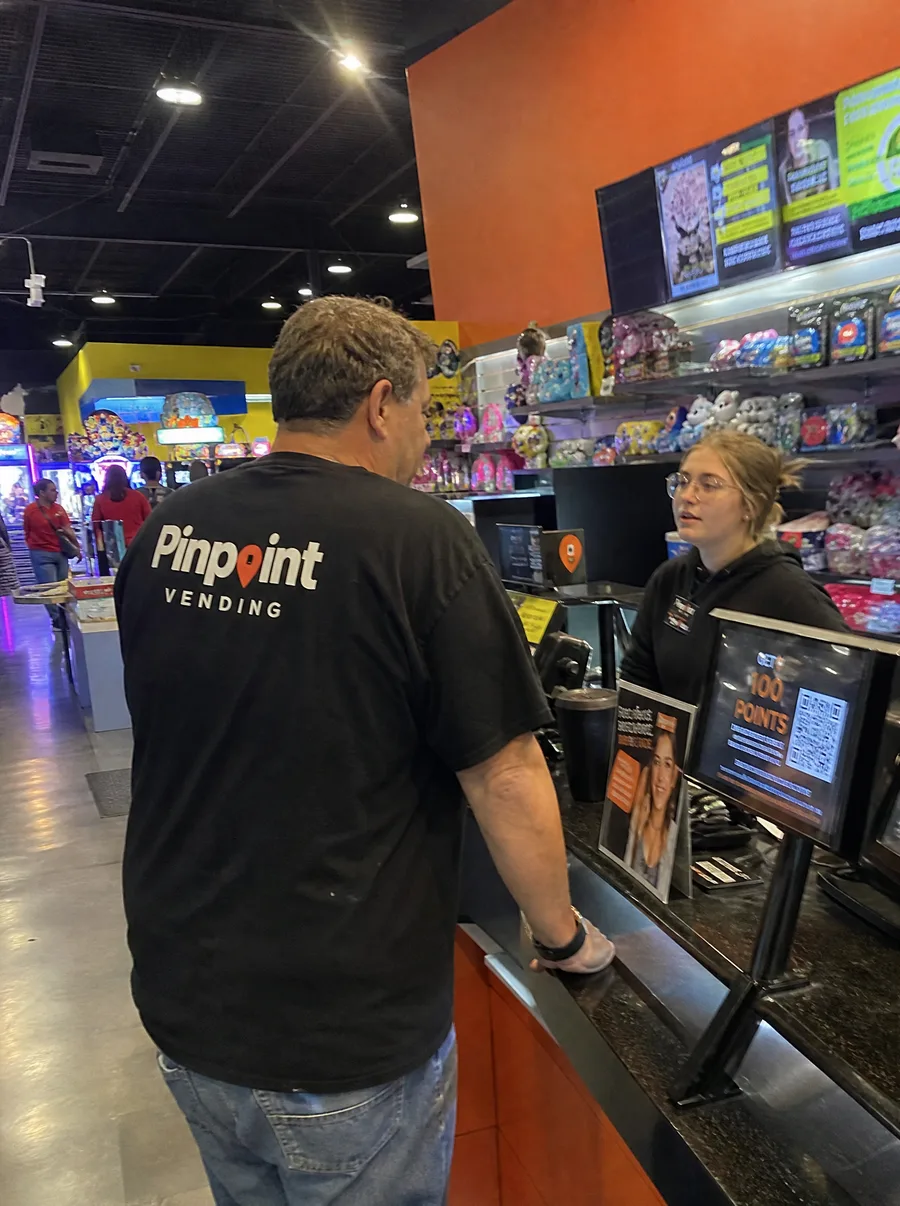
One disclosure first, because it shapes how you should read the comparison. Pinpoint finds and signs venues for operators of self-serve machines, and we partner with Sweet Robo, which makes the ICEE Cotton Candy machine. We do not install ICEE drink dispensers, sell slush equipment or arrange ICEE contracts. Two of the three routes below have nothing to do with us, and we say so where it matters.
What does "commercial ICEE machine" actually mean?
A commercial ICEE machine is a frozen beverage dispenser that pours the ICEE brand under an agreement with The ICEE Company. ICEE is a registered trademark, not a type of equipment. A slush or granita machine that pours any other syrup is a frozen beverage machine, even if it looks the same and the customer calls the drink "an icee."
The brand has a long history. Omar Knedlik, a Dairy Queen owner in Coffeyville, Kansas, created the drink in 1958, and the freezing machine was patented in 1960, according to the ICEE history on Wikipedia. 7-Eleven bought machines around 1965 and sold the drink as the Slurpee. J&J Snack Foods acquired The ICEE Company in 1987, and it still owns the ICEE, SLUSH PUPPIE and PARROT ICE trademarks.
The name is defended in court. In February 2026 a federal court in Ohio dismissed a case Slush Puppie Ltd. brought against ICEE after finding that an executive had forged the agreement the suit rested on, as Courthouse News reported. For a venue, the practical rule is simple: only call it ICEE on your menu if ICEE supplies it.
Search results blur this line. Most results for "mini icee machine" are home appliances, and dealer listings for cheap imported machines use "icee" as a generic word. The rest of this page uses "slush" or "frozen beverage" for generic equipment and "ICEE" only for the brand.
What are the three ways to get an ICEE-style drink into a business?
The three routes to an ICEE-style drink differ in who owns the machine, who services it, and whether the brand comes with it. ICEE's own program puts the brand and the service on ICEE's side. Buying equipment puts both on yours. A branded novelty machine skips the drink and borrows the brand for a different product.
| Route | Who owns the equipment | Who services it | Brand on the cup | Main constraint |
|---|---|---|---|---|
| ICEE places a dispenser | ICEE, or you under some programs | ICEE technicians | ICEE | Contract terms are set by ICEE; staff must pour and clean |
| Buy your own slush machine | You | You or a dealer service contract | Your choice of syrup brand | Upfront cost, CO2 and power for carbonated units |
| Add a branded novelty machine | You or an operator | The operator | ICEE-licensed flavors, not drinks | Not a frozen drink; a different product entirely |
The first two routes are drink programs and belong at a staffed snack bar or counter. The third is self-serve and stands on the floor, so a venue can run it alongside a drink program rather than instead of one.
Venue fit follows the same split. ICEE says its drinks sell in movie theaters, amusement parks, restaurants, mass merchandisers and convenience stores, all places with a counter and staff. Self-serve machines suit venues where families wait with no counter nearby: bowling concourses, playground seating and arcade floors. Of 155 Pinpoint-signed venues open across 33 states on 7 September 2026, the labelled categories include 18 bowling alleys, 15 indoor playgrounds, 10 family entertainment centers, 7 trampoline parks and 4 arcades. Our guide to vending machines in family entertainment centers covers how those venues choose machines, and types of vending machines compares the self-serve options side by side.
How does The ICEE Company's program work?
The ICEE Company's program installs and services the dispenser at the customer's site and supplies the ingredients. J&J Snack Foods' annual report for the fiscal year ended 27 September 2025 says the company "installs frozen beverage dispensers for its ICEE brand at customer locations and thereafter services the machines," arranges ingredient supply, and supports sales with in-store promotions and point-of-sale materials.
The same filing gives the scale. ICEE provides managed service or product to about 132,000 company-owned and customer-owned dispensers in the United States, Mexico and Canada. Product and parts ship from 172 company-managed warehouse and distribution facilities in 45 states, Mexico and Canada. Frozen beverages were 14% of J&J Snack Foods' revenue in fiscal 2025, and syrup comes mainly from Coca-Cola, Keurig Dr Pepper, Pepsi and Jogue.
ICEE's business page says it runs more than 100 service centers with over 650 frozen carbonated beverage technicians on call around the clock. Those are the company's own figures. What neither source publishes is the price: equipment terms, volume commitments and contract length are quoted per account. ICEE takes business inquiries through that page and by phone.
Two points matter for a venue weighing this route:
- Seasonality is real. The 10-K states plainly that frozen beverage sales are "generally higher during warmer months." An indoor venue with year-round traffic evens that out better than an outdoor midway.
- You still staff it. An ICEE dispenser is a fountain machine. Someone pours, wipes the valves and calls service when it freezes up.
What does it cost to buy your own commercial slush machine?
Buying a commercial slush machine costs a few thousand dollars for a non-carbonated granita unit and roughly $10,000 for a new carbonated one. As listed at one US dealer in October 2026, Elmeco granita machines ran from $1,646.97 for one bowl to $3,141.49 for three, and an FBD 772 two-flavor frozen carbonated beverage dispenser carried a minimum advertised price of $9,949.40.
| Machine (as listed October 2026) | Type | Listed price | Power and supply | Certifications listed |
|---|---|---|---|---|
| Elmeco FCM1 | Granita, one bowl | $1,646.97 | No CO2; check spec sheet for power | Not listed by dealer |
| Elmeco FCM2 | Granita, two bowls | $2,460.67 plus $125 shipping | No CO2; check spec sheet for power | HACCP compliance stated |
| Elmeco FCM3 | Granita, three bowls | $3,141.49 plus $125 shipping | No CO2; check spec sheet for power | HACCP compliance stated |
| FBD 772 | Carbonated, two flavors | $9,949.40 (MAP) | 230V, 20A, NEMA L6-20 outlet; CO2 and bag-in-box syrup lines | NSF 18; UL/CSA 60335-1 |
The FBD 772 listing adds the details a buyer needs to plan a site: a footprint of 17 inches wide by 32.5 inches deep, an empty weight of 298 pounds, a continuous draw of up to 4,500 ounces an hour, and a five-year warranty on the sealed refrigeration system. Taylor, the other large carbonated maker, lists 15 slush models on its slush equipment page but publishes no prices. Used Taylor 349 carbonated machines trade on resale sites, and a reconditioned unit with service history is a safer buy than an untested auction lot.
The sticker is not the whole cost. Budget for a dedicated circuit, a CO2 cylinder contract for carbonated units, syrup, cups and lids, and the time to clean the barrels on the schedule the manual sets. Our guide to how much a vending machine costs walks through the same hidden costs for self-serve equipment.
Carbonated (FCB) or granita: which slush machine fits your venue?
A frozen carbonated beverage (FCB) machine freezes syrup, water and CO2 under pressure, which gives the light, fizzy texture of a classic ICEE. A granita machine stirs and chills a non-carbonated mix in clear bowls. Granita machines cost less and are easier to clean; FCB machines need CO2, tighter pressure and temperature control, and more technical service.
Taylor's Upstate New York distributor describes its FCB system as one that "pumps carbonation into the product as it freezes," producing 80 to 120% overrun, meaning the drink expands with air. A dealer comparison of the two types adds that granita machines suit a wider range of mixes, including fruit, coffee and frozen cocktails, while FCB machines are built around soda-style syrups.
| Factor | FCB (carbonated) | Granita (non-carbonated) |
|---|---|---|
| Texture | Light, fizzy, ICEE-style | Denser, smooth slush |
| Supply lines | CO2 plus syrup, often a water line | Pour-in mix, no CO2 |
| Power | 230V on the FBD 772 | 120V on many models, such as the BUNN Ultra-2 |
| Cleaning | Barrels and valves; more technical | Bowls come apart for daily washing |
| Visibility | Product usually hidden in barrels | Product visible in clear bowls |
The decision usually follows the venue's staff, not the drink. A bowling center with a full snack bar and a maintenance person can carry an FCB machine or an ICEE program. A small indoor playground with one person at the front desk is better served by a granita bowl, or by no frozen drink at all.
What permits and certifications does a frozen drink machine need?
Frozen drink rules are set by your county or city health department, so the only reliable answer is to call yours before buying equipment. Some departments treat any frozen drink as food service under your existing food permit. Others carve out an exemption for drinks that never touch an open container before the cup.
King County, Washington is a clear example of the exemption approach. It lists "machine crushed ice drinks, such as slushies or slurpies" as eligible, provided "the frozen mix must dispense completely from a self-enclosed machine," and the business still has to apply for the exemption and be approved. Our post on vending machine licenses and permits and the state-by-state vending permit guides cover the licensing side for self-serve machines.
Equipment certification is the other half. Health inspectors look for food-equipment certification, and the standards differ by machine type:
- NSF/ANSI 18 covers manual food and beverage dispensing equipment. The FBD 772 lists it.
- NSF/ANSI 25 covers vending machines for food and beverages, which is the relevant standard for a self-serve unit.
- Federal calorie labeling under 21 CFR 101.8 applies to operators of 20 or more vending machines when the buyer cannot see nutrition information before paying.
Where does a branded novelty machine like ICEE Cotton Candy fit?
A branded novelty machine puts the ICEE name on a self-serve product without a drink program. Sweet Robo, Pinpoint's machine partner, makes two: the floor-standing ICEE Cotton Candy Vending Machine and the countertop ICEE Cotton Candy Mini Pro. Both spin ICEE-flavored sugar into cotton candy. Neither one dispenses a frozen drink.
The license runs through Santa Cruz Fun Foods, the exclusive licensee for ICEE Cotton Candy, according to Sweet Robo's July 2026 announcement. The release names four to six flavors per machine and lists malls, family entertainment centers, amusement parks and theaters as the target venues, with the first 100 machines shipping for a summer 2026 rollout.
This route answers a different question from the first two. A frozen drink machine needs a counter and staff; a self-serve cotton candy machine needs a floor spot, an outlet and a restock visit. In Pinpoint's own records, 121 of the 140 signed venues that name the machine they want ask for cotton candy (snapshot of 7 September 2026). That is the demand we see from venues, not a sales figure, and it is why we built a page on the cotton candy vending machine and a guide to the best places for a cotton candy vending machine.
We will not quote sales or margin figures for these machines, from Sweet Robo's pages or anyone else's. Pinpoint does not stand behind any per-machine earnings claim.
Why won't a home ICEE machine work in a business?
A home ICEE machine is a licensed kitchen gadget, not food-service equipment. The ICEE Small Slushie Machine sold by Fizz Creations crushes ice with syrup and makes about one liter at a time, which suits a family movie night and nothing more. Home units are generally not NSF-listed, and an inspector is unlikely to accept one behind a counter.
Home units dominate the search results, which is how venue owners end up buying them. Autocomplete for "icee machine for business" now suggests "ninja slushie machine for business," and home slushie makers fill most of the first page for "mini icee machine." The logo on a licensed home appliance also gives the buyer no right to sell drinks under the ICEE name.
FAQ
Can I get an ICEE machine for my business for free? ICEE's parent company describes a program in which ICEE installs the dispenser at the customer's location, services it, and arranges the ingredient supply. ICEE does not publish the contract terms, so whether the equipment carries a charge, a volume commitment or a minimum term depends on the program it offers your venue. Ask for those terms in writing before you agree.
How much does a commercial slush machine cost? As listed in October 2026, non-carbonated granita machines from Elmeco ran from about $1,650 to $3,140 at one US dealer, and an FBD 772 two-flavor frozen carbonated beverage dispenser had a minimum advertised price of $9,949.40. Installation, CO2 supply, a dedicated circuit and syrup are extra.
What is the difference between an ICEE and a slushie? ICEE is a registered brand owned by The ICEE Company, a subsidiary of J&J Snack Foods. Slush or slushie is the generic name for any frozen drink, carbonated or not. A machine is only an ICEE machine when it pours the ICEE brand under an agreement with the company.
Do I need a health permit to sell slushies? It depends on your county. King County, Washington, for example, lets a business apply for an exemption from a food permit for slushies only when the frozen mix dispenses completely from a self-enclosed machine. Other health departments treat any frozen drink as food service, so call yours before buying equipment.
Can I use a home ICEE machine in my store? No. Home slushie makers such as the licensed ICEE Small Slushie Machine make about one liter at a time from ice and syrup and carry no food-equipment certification. A health inspector expects commercial equipment certified for food service, and a home unit cannot keep up with a line of customers.
Does Sweet Robo make an ICEE drink machine? No. Sweet Robo's ICEE products are cotton candy machines: the ICEE Cotton Candy Vending Machine and the countertop ICEE Cotton Candy Mini Pro, made under license through Santa Cruz Fun Foods. They spin ICEE-flavored sugar into cotton candy and do not dispense drinks.
Next step
If you want an ICEE drink program, contact The ICEE Company directly; Pinpoint has no part in it. If you run or plan to buy a self-serve machine, such as a cotton candy robot, and need a family venue to put it in, browse the signed vending machine locations available now. For the wider picture of starting out, read how to start a vending machine business.
Zach Downey, Pinpoint Vending, runs Pinpoint Vending, which scouts and negotiates venues for vending machine operators. Figures in this article come from Pinpoint’s own scouting data and cited third-party sources; Pinpoint makes no representation about the income any operator will earn.
Keep reading
Vending Machine Not Taking Bills or Cards? Fixes by Fault
Vending machine not taking bills, coins or cards? Fixes by fault from Crane, AMS, Dixie-Narco and Nayax manuals, plus error codes and when to call a tech.
Vending Machine Card Readers: Costs, Fees and Setup (2026)
A vending machine card reader costs $289–$399 as listed in October 2026, plus about $10 a month and 5.95% a sale. Fees, signal and setup.
Ice Vending Machine Business: Site, Permits and Cost (2026)
An ice vending machine business is a site project first: 30 to 60 amps, a water line, a drain, a food permit and a pad lease. What each maker needs.