

Vending Machine Spots: Rent, Commission or Free? 2026
A vending machine spot is floor space in someone else's building, and it is almost never rented. Across the 84 Pinpoint host agreements that state a figure, every one pays the venue a percentage of revenue and none charges flat rent. The going rate is 30-50% of sales after cost of goods, most often 40%.
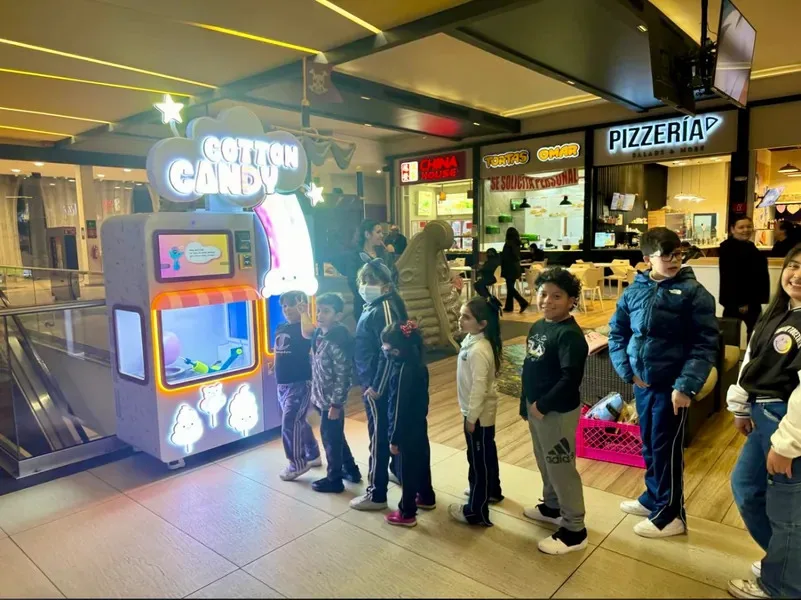
"Vending machine spot" gets used for three different things — the physical floor space, the commercial arrangement behind it, and a venue that is open to an operator. This post separates them and puts a number on each, from paperwork venues have already signed. The broader methods are in how to find vending machine locations.
What is a vending machine spot?
A vending machine spot is a defined position inside a venue where an operator is permitted to place and service a machine. It is not a lease and not a tenancy. What changes hands is permission — usually a revocable licence to occupy a named position — and a well-drafted agreement says so, because an operator with a tenancy has rights the venue never meant to grant.
Three things make a spot a spot rather than an idea. It has a named position, written down in inches and landmarks rather than "by the door". It has power within reach. And it has someone who had the authority to grant it, which at an independent venue is often the general manager and at a franchised or leased site is frequently not. Who can sign is the single most common place a spot falls apart, and it is handled clause by clause in our vending machine contract template.
Do you rent a vending machine spot, or pay a share of sales?
Almost nobody rents a vending machine spot. Of the 84 Pinpoint host agreements that state a figure, every single one is a percentage of revenue: 56 at 40%, 14 at 50%, 11 at 30%, 2 at 35% and one at 45%. Not one is a flat monthly rent. Operators who do pay rent generally report $50-300 a month, and they are the minority in every published survey.
The reason is risk, and it runs in the direction people assume it does not. Flat rent costs the same whether the machine takes nothing or takes a lot, so a quiet venue bills the operator anyway. A revenue share costs nothing in a dead month. Venues that understand their own traffic prefer the share because it pays more when they are busy; operators should prefer it because it cannot bankrupt a bad placement.
| What you pay | What it costs in a quiet month | What it costs in a busy month | Who carries the risk |
|---|---|---|---|
| Flat rent | The full rent | The same rent | The operator |
| Share of gross sales | A small share of a small number | A share of everything, before your costs | Shared, tilted to the venue |
| Share after expenses | Close to nothing | A share of what is left after product, fees and tax | Shared, tilted to the operator |
| Nothing | Nothing | Nothing | The operator, in lost sales from a low-traffic site |
Watch the base, not only the percentage. A 20% share of gross and a 40% share after expenses can land within a dollar of each other on the same machine, which is why the expense list has to be closed at four items — product cost, card processing, sales tax and refunds — rather than ending with "and other costs". Rates by venue type are in how much vending machine owners pay locations, and independent surveys such as VendBuddy's commission write-up put the common band at 10-25% of gross.
What does a vending machine spot cost?
A vending machine spot costs a share of what the machine takes, and the share tracks how much traffic the venue brings. In Pinpoint's signed inventory, entertainment venues cluster at 40% — bowling alleys, indoor playgrounds, family entertainment centers and trampoline parks all sit there — while retail sites and gas stations, with four to seven times the reported annual visitors, charge 50% and get it.
| Venue type | Signed venues | Median share to venue | Median annual visitors |
|---|---|---|---|
| Bowling alley | 18 | 40% | 50,000 |
| Indoor playground | 15 | 40% | 40,000 |
| Family entertainment center | 11 | 40% | 65,000 |
| Trampoline park | 7 | 40% | 150,000 |
| Arcade | 4 | 35% | 55,000 |
| Retail | 3 | 50% | 255,000 |
| Gas station | 2 | 50% | 360,000 |
The visitor column rests on the 71 of 155 open venues that report a count, so the smaller categories are indicative rather than firm. The share column is the solid one. Note what the table does not contain: a figure for what any machine earns. Pinpoint publishes no earnings claim for any machine, and a venue's share is a cost, not a forecast.
When is paying rent for a spot better than paying a share?
Flat rent beats a revenue share in one situation: when the machine reliably out-earns the rent and the venue would have taken a larger percentage. A high-traffic site that wants 50% of revenue after expenses is expensive for a machine that performs, and a fixed $150 a month may be cheaper over a year. The trade is that you have bought the downside too.
Three conditions have to hold before that trade is worth taking. You need history on the specific spot, not the venue — a machine that did well by the lanes says nothing about the lobby. You need a term short enough to exit, which argues for 12 months with a 30-day termination rather than a multi-year commitment. And you need the venue to actually offer it, which in our inventory has not happened once in 85 agreements.
For a first machine, take the share. A first placement is a guess about traffic you have not measured, and the share is what makes a wrong guess survivable. If the venue insists on rent and will not move, that is a signal about how the venue views the machine: as a tenant, not a service. The reverse case — venues that charge nothing at all — is covered in where can I put a vending machine for free.
How big is a vending machine spot, and where should it be?
A vending machine spot needs roughly 30 to 40 inches of wall width, 30 to 36 inches of depth including clearance to open the door for servicing, and a standard 110V outlet within reach of the machine's own cord. It must also sit clear of fire exits, extinguishers and accessible routes, which is the first thing any venue with public liability exposure will check.
Position inside the building matters more than the building's total traffic. Put the machine where people already stand still: the waiver desk, the grip-sock counter, the seating along a bowling lane, the queue for a food counter. A spot by the exit catches people who have finished spending. A spot where a family waits with a bored child catches them mid-visit, which is the whole case for entertainment venues over offices.
Write the position down before anything is delivered. "Lobby, east wall, six feet left of the main entrance, footprint 30 by 36 inches" is a location; "by the door" is an argument waiting to happen. Photograph the agreed spot and attach the photograph to the agreement. Our 8-point scoring method covers how to judge a position before you commit to it, including dwell time, power and access.
Where are vending machine spots available right now?
Spots described as available split into two different things, and the word does not tell you which you are looking at. A lead list calls a business available when it has not refused yet, which is a name and a phone number. Pinpoint calls a venue available when it has signed a host agreement and has no machine: 155 of those, across 33 states and 151 cities, waiting a median of 62 days at the September 2026 snapshot.
California leads with 19 open venues, then Ohio with 16 and New York with 15. Sixteen states show nothing at all, which reflects where our scouts have worked rather than where demand exists. The full comparison of what different sellers mean by the word, with their own prices, is in vending machine locations available near me, and the venue types that actually ask for a machine are ranked in places that need vending machines.
Spots that are genuinely open and advertised are rare for a straightforward reason: a venue that wants a machine tells the first operator who walks in. That is also why the highest-converting route is still the unglamorous one — walking into entertainment venues inside a 30 to 45 minute drive, mid-morning, Tuesday to Thursday. Our scouts qualified 26,311 venues to reach 329 signed agreements, about one per 80 approached.
What do operators get wrong about vending machine spots?
Three mistakes repeat, and all three come from treating a spot like retail space. The first is shopping for rent. An operator who goes looking for a vending machine spot to rent will mostly find lead brokers using the phrase as bait, because the venues themselves are not thinking in rent and never advertised one.
The second is buying the machine before the spot. A combo snack cabinet bought in advance narrows the search to buildings that already have a competitor inside them, while the venues with open floor space are asking for something their visitors watch being made. The order argument, and what an unplaced machine costs each month it waits, is in buy a vending machine or find a location first.
The third is assuming a public-looking spot is available to grant. A gas station forecourt, a mall concourse and a hospital lobby all look public and are private property with a procurement process behind them; a sidewalk or park is genuinely public and needs a city permit or concession rather than an agreement with anyone in the building. The legal line is drawn in where you can legally put a vending machine.
FAQ
Can you rent a spot for a vending machine? Rarely, and you usually should not want to. Across the 84 Pinpoint host agreements that state a figure, every one pays the venue a percentage of revenue and none charges flat rent. Rent moves the risk of a slow venue onto the operator, which is why venues that know their traffic prefer a share.
How much does a vending machine spot cost? Most spots cost a share of what the machine takes rather than a fee. In our signed agreements that is 30-50% of revenue after cost of goods, with 56 of 84 at 40%. Operators who do pay flat rent typically report $50-300 a month.
How much space does a vending machine spot need? About 30 to 40 inches of wall width, 30 to 36 inches of depth including service clearance, and a standard 110V outlet within reach. The spot must be clear of fire exits, extinguishers and accessible routes, which is the first thing a venue with public liability exposure checks.
Are there vending machine spots available near me? It depends what the seller means by available. Pinpoint holds 155 venues that have signed a host agreement and have no machine, across 33 states and 151 cities, waiting a median of 62 days. Most other listings described as available spots are lead lists of businesses that have not refused yet.
Do any venues give a vending machine spot for free? Yes. Small offices, workshops, churches and clubs often host for nothing, because the machine solves a problem for their people and the traffic is too low for a share to be worth collecting. Free placements are real, and they are usually the lowest-traffic spots available.
What is a good spot inside a venue? Where people already stand still. The waiver desk, the grip-sock counter, the lane seating, the queue for a food counter. A spot by the exit catches people who have finished spending; a spot where families wait with a bored child catches them mid-visit.
Next step
Decide the spot before the machine, and take a share rather than rent on a first placement — a wrong guess about traffic costs nothing in a month where the machine is quiet. If you want to start from venues where the position and the share are already agreed, the 155 on our list have signed and are waiting a median of 62 days. Browse what is open near you, or read the pricing — a $1,199 enrollment fee, all of it back plus $1,000 if we do not present you a location within 6 months.
Zach Downey, Pinpoint Vending, runs Pinpoint Vending, which scouts and negotiates venues for vending machine operators. Figures in this article come from Pinpoint’s own scouting data and cited third-party sources; Pinpoint makes no representation about the income any operator will earn.
Keep reading
Vending Machine Placement Proposal: Free Template 2026
A one-page vending machine placement proposal you can copy, with every number in it benchmarked against 329 signed Pinpoint host agreements.
Pokémon Card Vending Machine Business: Rules and Venues
A Pokémon card vending machine business runs on your own machine, since official ones aren't for sale. Sourcing, counterfeits, mystery-pack law, venues.
Places That Need Vending Machines Near Me: 2026 Data
Which places actually need vending machines, from 89 venues that signed and asked for one: bowling alleys, indoor playgrounds and FECs lead.