

Vending Machine Locations Available Near Me: What It Means
"Available" means two opposite things. To most lead sellers it means a business name and a phone number that has not said no yet. At Pinpoint it means a venue that has signed a host agreement and has no machine in it, typically having waited a couple of months for an operator to arrive.
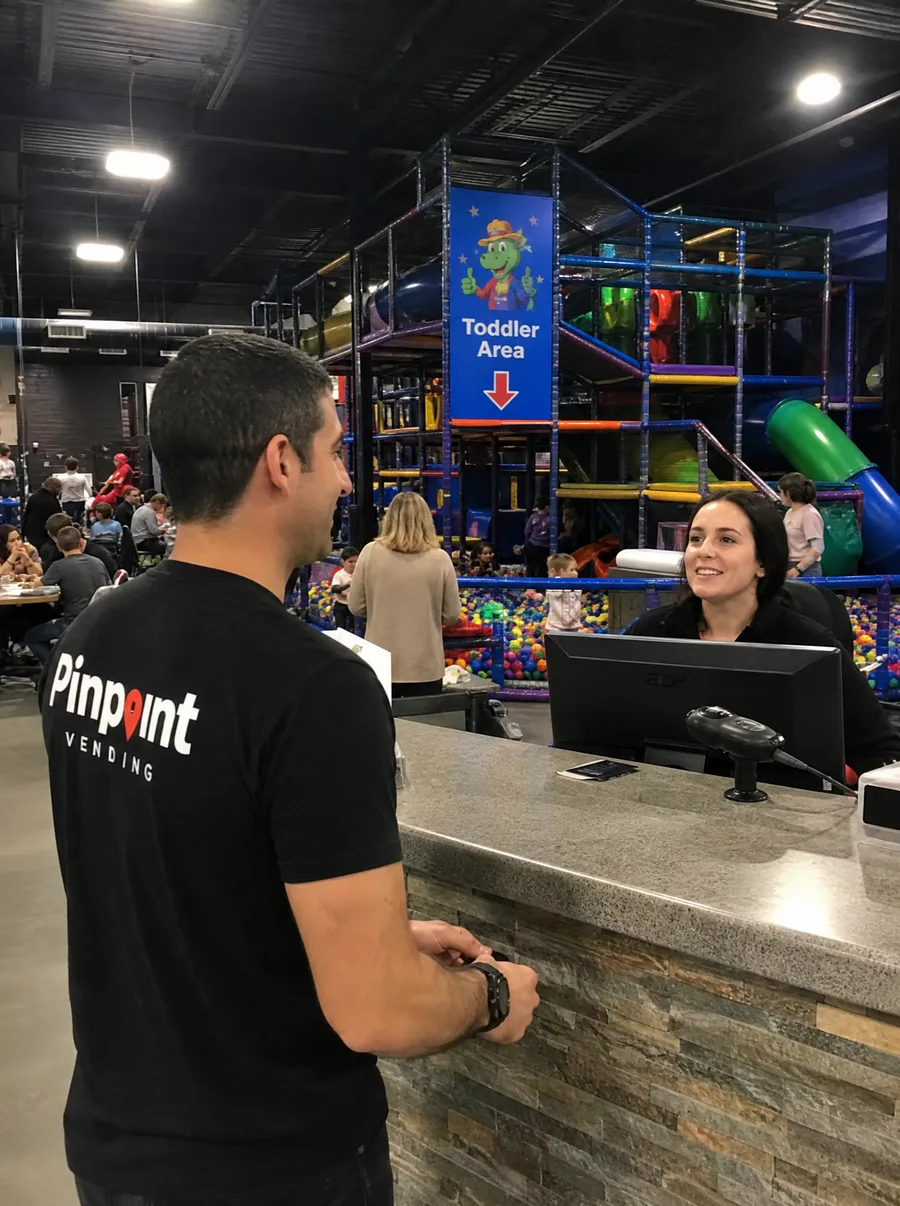
Anyone searching for vending machine locations near them will be sold three different products under one word. This post separates them, then publishes the inventory data nobody else does: how many signed venues are open, how long each has waited, and what those venues are asking for. Start here, then check the live list at vending locations.
What does an "available" vending machine location actually mean?
An available vending machine location should mean a venue that has agreed, in writing, to host a machine and does not have one yet. In practice the word is used for anything from a business that once answered a cold call to a venue with a countersigned host agreement and a revenue share already negotiated. The gap between those two things is the whole cost of a bad placement decision.
Nobody polices the word, so the seller picks the definition. A lead broker calling a business "available" is telling you nothing more than that the business exists and is in your zip code. Pinpoint calling a venue available is a claim you can check: the venue signed, the share is fixed, and the listing disappears when a machine goes in.
Lead, locator promise, or signed agreement: which are you buying?
Three products get sold as "available locations", and they differ in what the venue has actually committed to. A lead is a name. A one-off locator fee is a promise that someone will go and get a yes. A signed host agreement is a venue that is already contractually committed to hosting a machine. Price is not what separates them — commitment is.
| What you buy | What the venue has agreed to | What you still have to do | Typical cost |
|---|---|---|---|
| Lead list | Nothing. The business may not know it is on a list | Find the decision maker, pitch, negotiate the share, get it signed | $19 per list, or $39 a month |
| One-off locator fee | Nothing yet. The locator will go and pitch on your behalf | Accept whatever terms the locator negotiates; pay again if it falls through | $300–$500 per placement, sometimes far more |
| Signed host agreement | Hosting a machine, at an agreed revenue share, in a named venue | Pick the venue, sign, and install | An enrollment fee, quoted on a call and partly a refundable deposit, then a monthly placement fee from a month after you sign |
Be fair to the first two. A $19 lead list is honest value if building the target list is the part you dread and you can already pitch — you are buying a spreadsheet, and it is priced like one. A one-off locator is reasonable if you want a single placement handled and can absorb the fee if it fails. The mistake is paying for a lead while believing you bought an agreement. The full comparison of all four routes, with the sellers' own prices, is in are vending machine locator services worth it. The same confusion attaches to the word “spot”, which is used for floor space, for the commercial arrangement and for an open venue — those three are separated in vending machine spots.
How many vending machine locations are available right now?
The honest answer is that it changes daily, which is why the number worth checking is the live one rather than one printed in a blog post. Venues enter the list as agreements are countersigned and leave it as operators take them. Every open venue carries its city, venue type and revenue share on the public list of signed vending machine locations available now.
What stays constant is the shape of it. Open inventory is always small relative to the scouting behind it, because most venues approached never sign, and it skews heavily to family entertainment: bowling alleys, indoor playgrounds, family entertainment centers and trampoline parks.
How long has an available location been waiting?
A signed venue with no machine in it has typically been waiting a couple of months, and rarely more than three or four. That clock starts at the countersigned agreement, not at the moment someone answered a phone, which is what makes it a meaningful number at all.
Venues enter the list continuously as new agreements come in, so at any moment the inventory holds a mix of ones signed last week and ones that have been waiting a while. The older end of that range is the opportunity: a venue that has been waiting has already agreed to everything and simply has nobody to install.
Compare it with any date a lead seller can give you, which is the date the record was created. A wait measured on signed agreements is a measure of operator supply. A two-month-old lead is just a stale phone number.
Why does a signed venue wait for an operator at all?
A signed venue waits because the venue's decision is finished and the operator's has not started. The venue agreed to a machine type, a spot and a revenue share; what has not happened is an operator with that machine turning up inside driving range. That gap is the reader's opportunity, and it is the reason these venues are on the list at all rather than being a backlog of problems.
Machine type is the biggest reason a venue sits. 121 of the 140 open listings that name a machine type ask for cotton candy — around 86% — because the venues signing are family entertainment venues that want an attraction visitors watch being made, and most already have drinks and snacks covered. An operator with a cotton candy machine is matching against a much larger pool than an operator with a snack machine.
Geography is the second reason. Matching is done by driving distance, not state lines, so a venue can sit signed and open while the nearest willing operator is four hours away. How far should you drive to service a vending machine covers where that line usually falls.
Which states have the most available vending locations?
Open inventory concentrates in the states where our scouts have worked hardest rather than in the biggest vending markets, and it moves as venues get taken. California, Ohio, New York, Texas, Wisconsin, Georgia and Florida are usually among the better-stocked ones, and some states show nothing at all at any given moment.
The more useful question is which states have venues waiting with no machines placed nearby, because that is where an operator faces least competition for the venue. Browse the current position by state:
Or see the full map at vending locations.
How do you check whether a location is genuinely available?
Checking is a five-question test, and any seller who cannot answer all five is selling a lead. Ask them in this order, before money changes hands, and write the answers down — the FTC Business Opportunity Rule requires a covered seller to hand you a disclosure document seven calendar days before you pay, so there is time to ask (16 CFR Part 437).
- Has the venue signed anything? Ask to see the agreement type and its date. "Interested" and "signed" are not the same word.
- What is the venue's revenue share? A real agreement fixes it. Pinpoint venues typically take 30–40% of revenue after cost of goods, and the exact figure for each venue is shown before you choose. What a vending location agreement should contain covers the clauses.
- What machine did the venue agree to? A venue that signed for cotton candy is not an available location for a snack machine.
- Where exactly is it, and how far is that from you? City and state, not "your area".
- What happens if no venue appears? A deadline and a refund, or nothing. Pinpoint refunds everything you paid if no location is presented within 6 months.
Run the same five questions at vending locations and the answers are on the page: city, state, venue type, machine requested, and the venue's share. The failure patterns that these questions catch are cataloged in vending machine scams to avoid.
What kind of venues are actually open?
Family entertainment venues dominate the open inventory. Bowling alleys, indoor playgrounds, family entertainment centers and trampoline parks make up the bulk of it, with arcades, water parks, hotels and retail filling out the rest. These are venues where families spend an afternoon rather than two minutes.
Reported foot traffic varies widely by type, and not every venue reports it. Trampoline parks tend to report the highest annual counts, followed by family entertainment centers, then bowling alleys and indoor playgrounds. Those are historical venue visitor counts, not machine performance — Pinpoint publishes no earnings figures of any kind. Vending machines in trampoline parks goes venue by venue.
FAQ
What does "vending machine location available" actually mean? It depends entirely on who is using the phrase. Most lead sellers use "available" to mean a business that has not refused vending yet, which is a name and a phone number. Pinpoint uses it to mean a venue that has signed a host agreement and has no machine in it.
How many vending machine locations does Pinpoint have available? It changes daily, which is why the live marketplace is the place to check rather than a figure printed in a post. Each venue on it has signed a host agreement and agreed a revenue share before it appears, and the list changes as machines go in and new venues sign.
How long do available vending locations stay open? Typically a couple of months, and rarely more than three or four. A venue waits because the right operator with the right machine has not turned up inside driving range yet, not because the venue changed its mind.
Why do so many available locations want a cotton candy machine? 121 of the 140 open listings that name a machine type ask for cotton candy. Family entertainment venues — bowling alleys, indoor playgrounds, trampoline parks — want an attraction their visitors watch being made, and most of those venues already have a drinks and snacks machine.
Can I see the available locations before I pay anything? Yes. Every open venue on /vending-locations shows its city, state, venue type, the machine type requested and the venue's revenue share before you commit to anything. Pinpoint refunds everything you paid if no location is presented within 6 months.
Is a location available near me if none is listed in my state? Possibly. Open venues are spread unevenly, some states show nothing at any given moment, and a venue two hours across a state line may still be inside your service radius. Pinpoint's average search when scouting from scratch is about 3 months.
Next step
Open vending locations and filter to your state. Every venue on that page has signed a host agreement, has no machine in it, and shows its city, venue type, requested machine and revenue share before you commit to anything. If nothing is open near you today, our locator service can scout your area from scratch, the same page is where new signatures appear, and the deposit stays refundable until you are placed. For the method behind all of it, read the pillar guide on how to find vending machine locations.
Zach Downey runs Pinpoint Vending, which scouts and negotiates venues for vending machine operators. All Pinpoint figures are from the 7 September 2026 inventory snapshot and change as venues sign and machines are installed. Pinpoint makes no income representation and publishes no earnings figures. Drafted with AI assistance and reviewed by the author. About Pinpoint.
Zach Downey, Pinpoint Vending, runs Pinpoint Vending, which scouts and negotiates venues for vending machine operators. Figures in this article come from Pinpoint’s own scouting data and cited third-party sources; Pinpoint makes no representation about the income any operator will earn.
Keep reading
Cotton Candy Vending Machine Locations: What Venues Want
What venues ask for before they take a cotton candy vending machine: the revenue share, who cleans it, and the three objections that decide the deal.
Vending Machine Spots: Rent, Commission or Free? 2026
Vending machine spots are almost never rented. Across our signed host agreements, every one pays the venue a share of revenue — none pays flat rent.
Vending Machine Placement Proposal: Free Template 2026
A one-page vending machine placement proposal you can copy, with every number in it benchmarked against host agreements venues have actually signed.