

A screen for a machine that has none.
No screen on your machine? No worries — we’ll send you one.
 Before
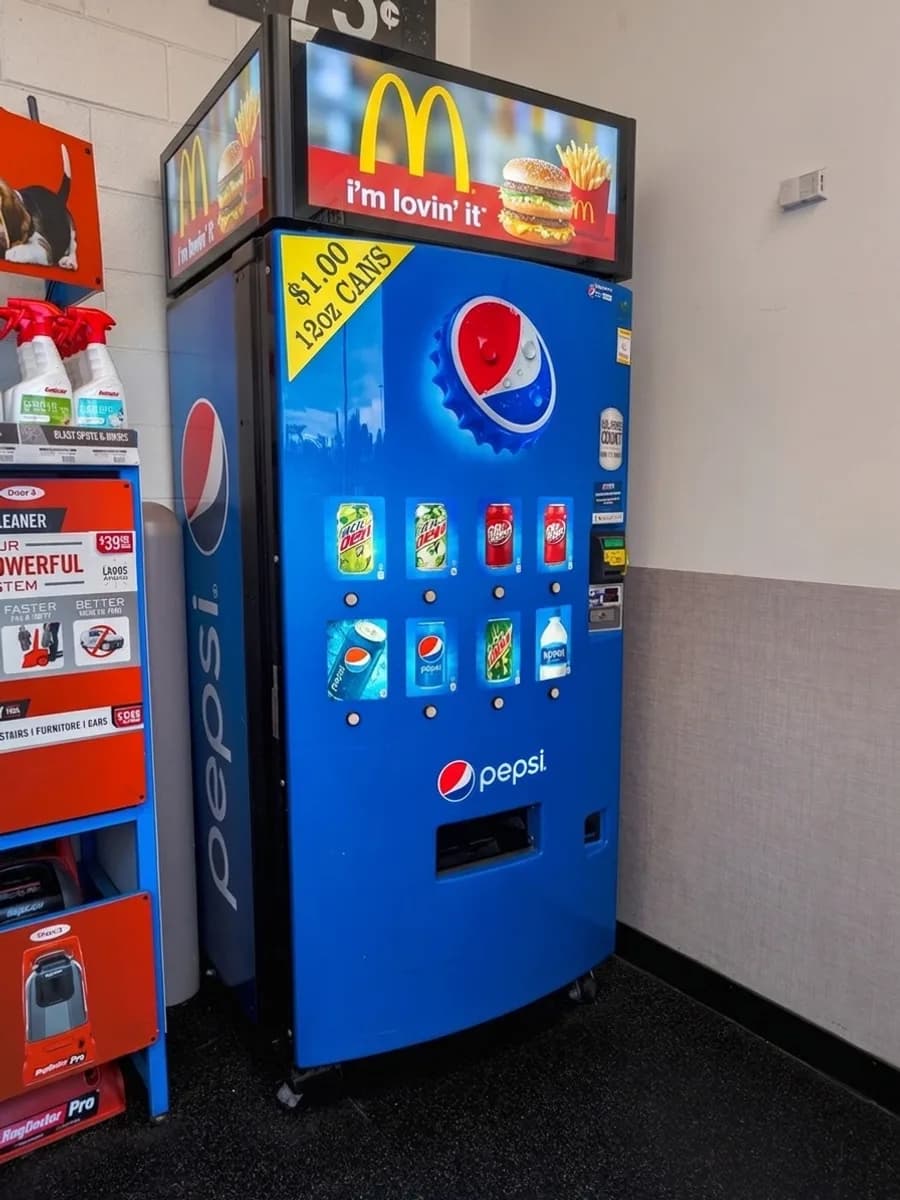 After
Which machines
If it sells something, it can carry a screen.
The screen goes on the outside of the machine rather than inside it, so its age, its make and whether it takes cards are not what decides this. What decides it is the shape of the cabinet and the room it stands in. Three things tell us both:
- Make and model
- Whatever is on the plate. A snack machine, a drinks machine, a claw, a specialty machine — we place screens on all of them.
- Where it stands
- The kind of room and roughly how busy it is. This is what decides what the screen earns: $50–$100 a month is the average, and $500–$1,000 is what a busy floor does.
- A photograph
- One picture of the machine, taken on your phone, with its top and one side in frame. That is the whole of the qualifying.
Where it goes
More than one screen, and more than one place it goes.
Machines are not one shape, so the screens are not one screen. These are three of ours on machines that had none, photographed where they stand. Which of them your machine takes is what the photograph on the first call settles — you do not have to work it out yourself.
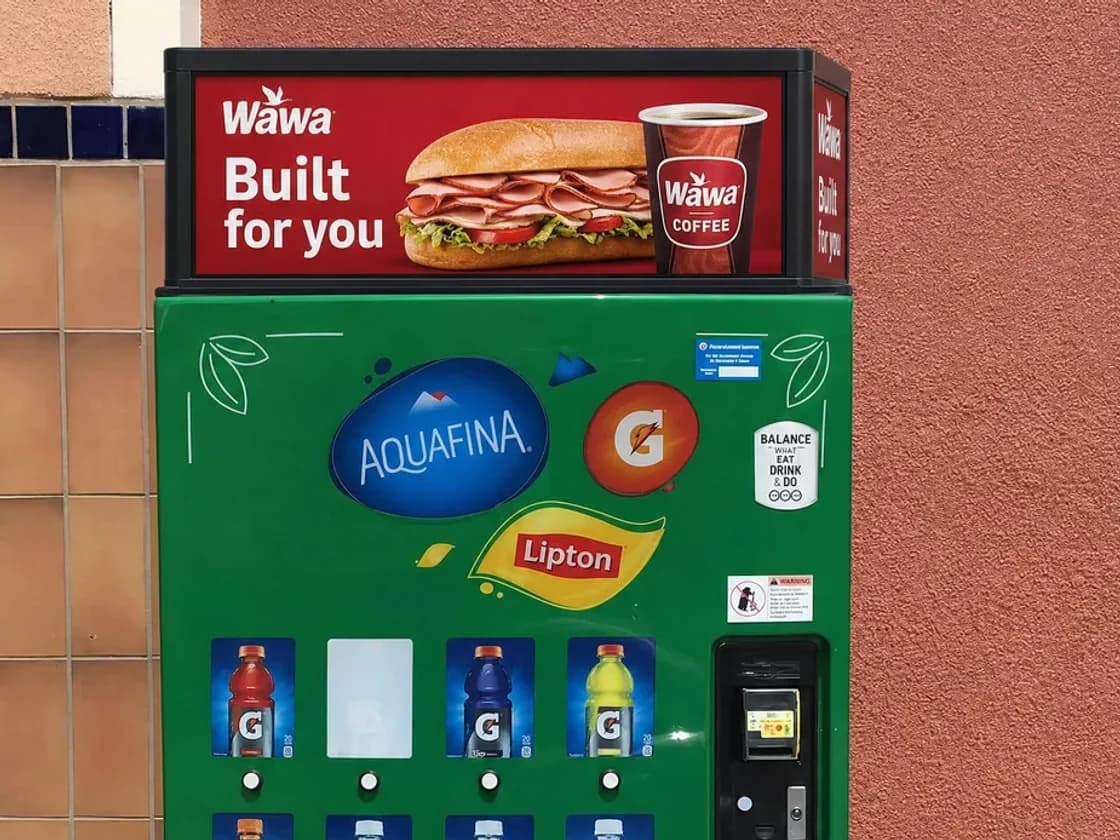
A drinks machine with one of our screens on top, running a Wawa advertisement. On top of the machine
A flat top, with clear space above it
The screen sits above the machine, over the product window and at the eye level of whoever is walking towards it. It is the one most machines take.
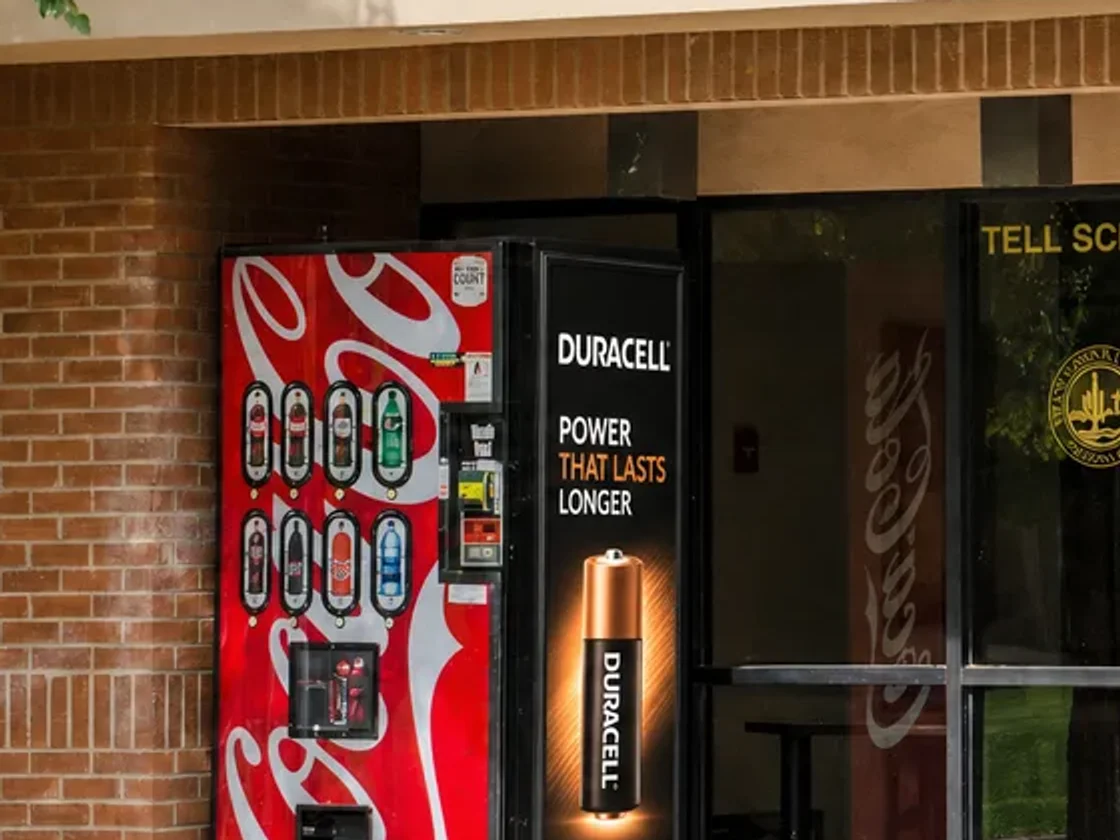
A drinks machine at a campus entrance, the screen down its right-hand side running Duracell. On the side of the machine
A panel free down one side of the face
A tall screen level with the machine and running most of its height, taking the place of a panel rather than standing above it. A low ceiling, a shelf or a sign over the top does not rule this one out.
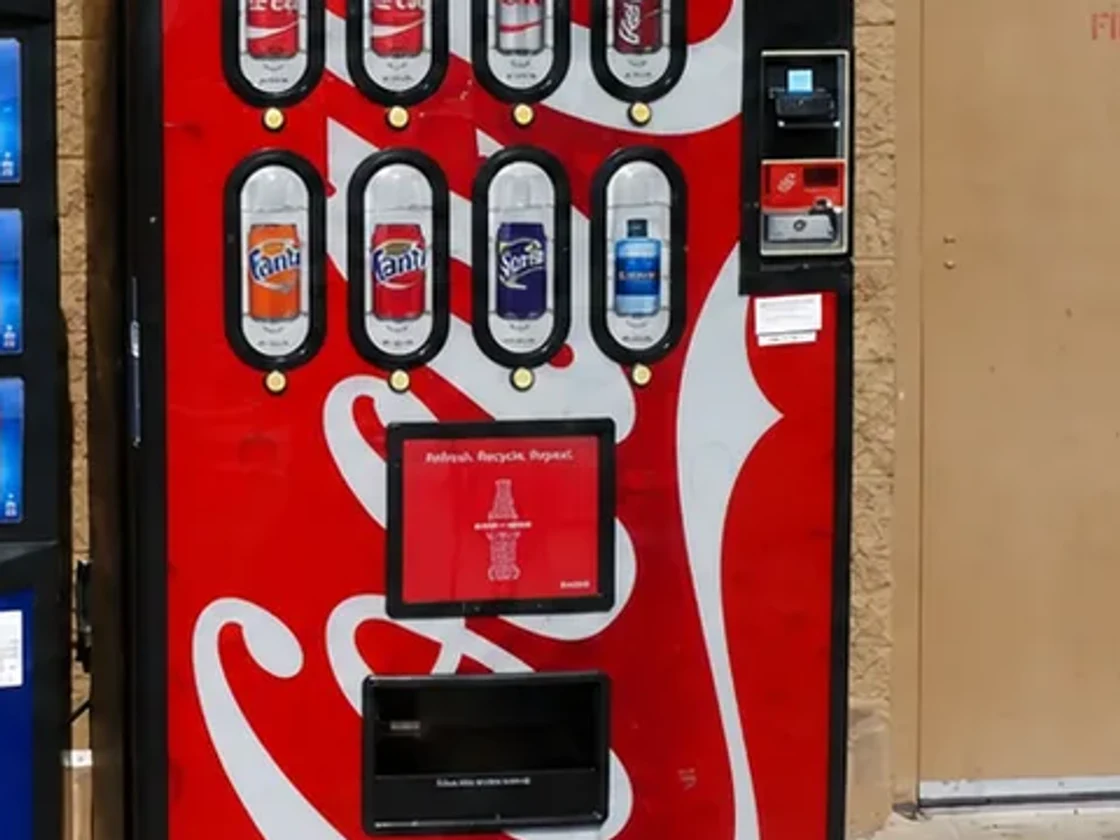
A drinks machine outside a storefront, the screen on its face running Coca-Cola. On the front of the machine
A clear panel on the face, beside or under the selections
The screen goes on the face of the machine itself, in front of whoever is standing at it choosing rather than off to one side of them. A machine boxed in on both sides and under something can still take this one.
Every one of them runs the same network, carries the same ad categories and pays the same way. Where the screen sits changes nothing about what it earns — that is decided by the room.
The process
From a phone call to a screen that earns.
Five steps: you tell us what you have, put down the deposit and install the screen, and we do the rest. Nothing is signed for a location, nothing is financed, and the machine keeps trading the whole way through.
Tell us what you have
The make and model of the machine, the kind of room it stands in, and a photograph of it with the top and one side in frame. That is everything we need to say which screen goes on it.
One call to start- Before anything is sent
We check it fits
We look at the machine and at the room, and tell you which screen it takes and what a screen is worth where that machine stands. A quiet corridor and a busy lobby are not the same offer, and we say so before anything ships.
- $100 deposit per screen
The screen ships to you
You put down a $100 deposit per screen, returned from your ad revenue, and we send the screen once we have it. Sending it is how we get our advertisers another screen to run on. The questions below say exactly how the deposit comes back.
- The machine sells exactly as it did
You install it
At your own cost, as we instruct: mounted on top of the machine, down one side of it or on its face, whichever your machine takes — see the three placements above — with its power and data connected. Nothing inside the machine changes: the same product, the same prices, the same card reader, the same service round.
- $50–$100 a month on average
It goes live on the network
The same network the built-in screens run. Ads play between orders, every ad category has a switch of its own in your dashboard, and the screen starts earning. What it earns is set by the room it stands in — a busy floor does $500–$1,000.
One we shipped
A screen we sent, and what it took.
This is not a built-in screen earning this. It is one of ours, on a machine that had none — the same thing we would send you.
Shopping center
- $912Month 1
- $764Month 2
- $968Month 3
$2,644 over 3 months
A typical quarter for that machine, inside the range it has run between. See all four case studies →
Who pays for the ads
What a screen earns comes from these brands buying the time on it.
5,000+ screens are running this network and $100,000+ has been paid out to operators across it to date. Yours would be one more screen for the same advertisers to bid on.












Third-party trademarks, shown to identify the advertisers buying on the network. Which of them may appear on your machine is a switch in your dashboard.
Questions